Learn go-stop
The Korean card game families gather around during holidays. Learn the rules in five minutes.
In the late 16th century, Portuguese missionaries brought playing cards called cartato Japan. To skirt the Edo shogunate's gambling bans, they mutated into floral picture cards called hanafuda (花札), and entered Korea via Tsushima merchants in the late 19th century — eventually becoming hwatu (화투).
What are hwatu cards?
12 months × 4 cards = 48 in total. Each card belongs to one of four types. Filter by type, then click any card to see details appear on the right.
Brights
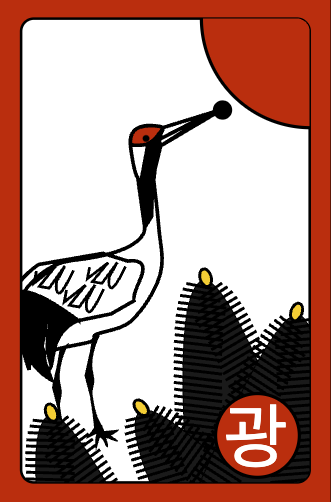
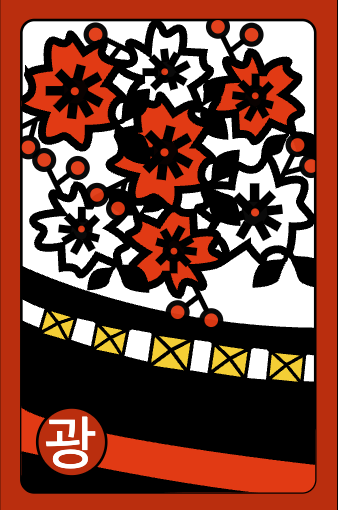
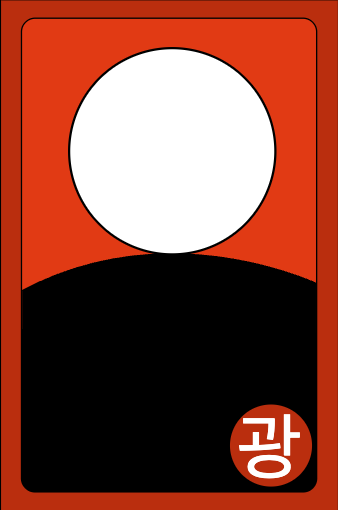
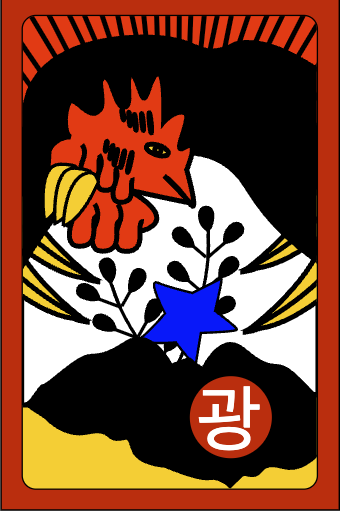
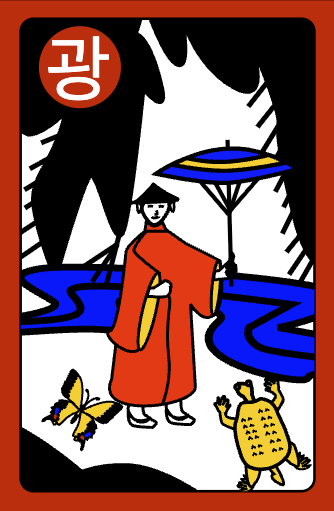
광 · GwangOne per month for five months (Jan, Mar, Aug, Nov, Dec). Most prestigious — 3+ start scoring.
Ribbons
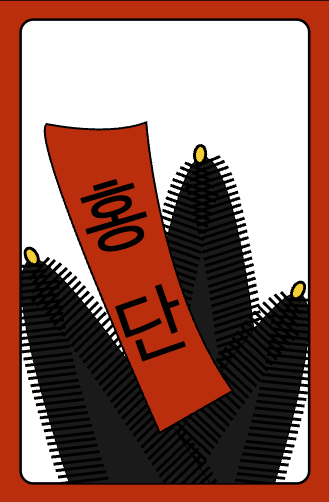
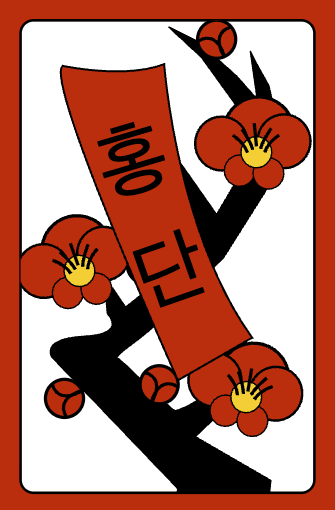
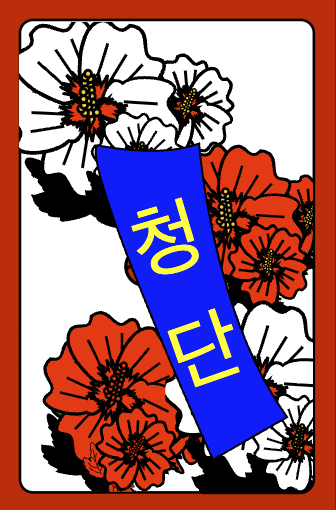
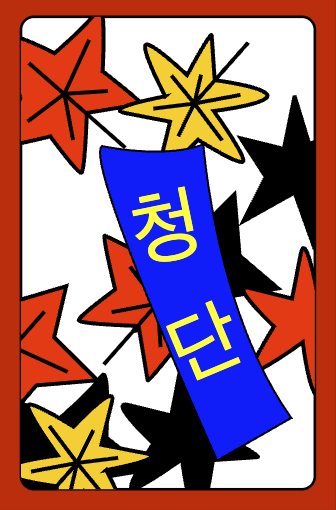
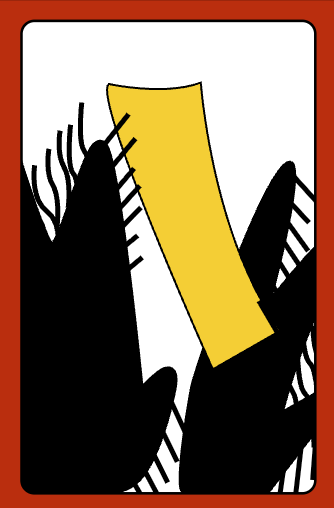
띠 · TtiOne per month, in 10 months. Red, blue, or grass-colored — three of a color = combo (Hongdan / Cheongdan / Chodan).
Animals
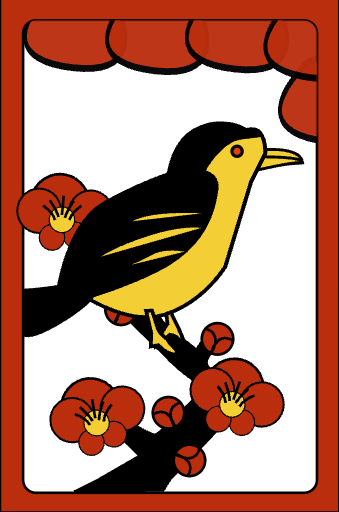
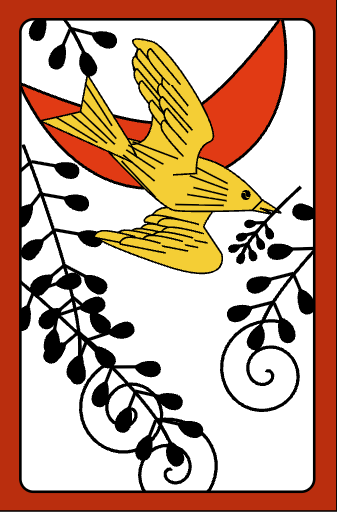
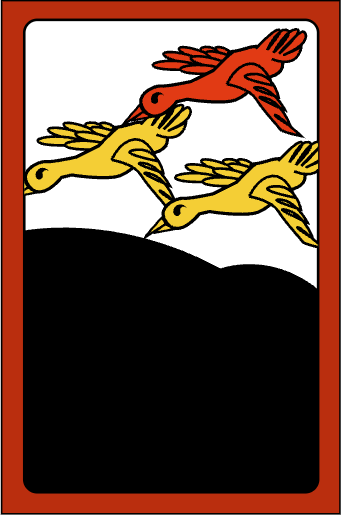
끗 (열끗) · KkeutOne per month, in 9 months — animals, birds, scenery. Three songbirds (warbler, cuckoo, geese) = godori combo.
Pips
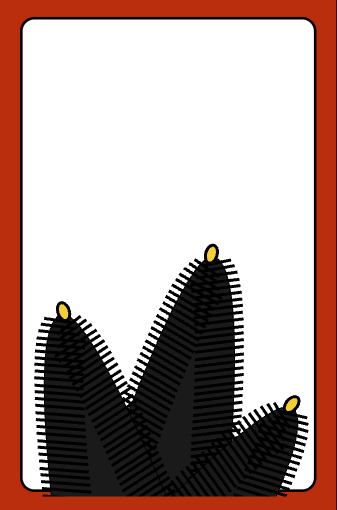
피 · PiTwo per month for most (most common type). November and December 'double pi' count as ×2 — bonus pi too.
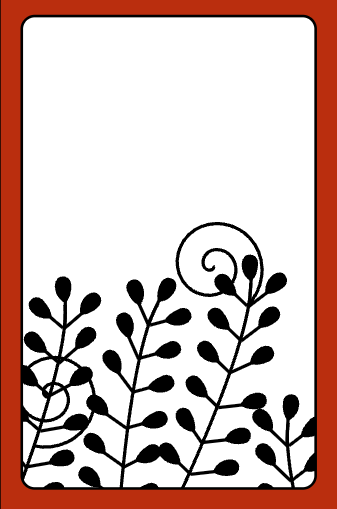
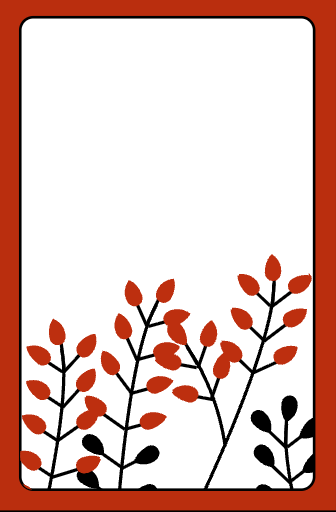
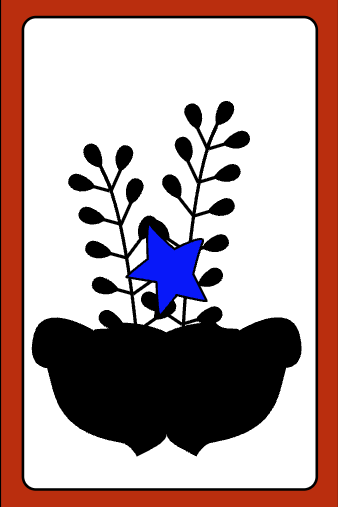
First of the year. Pine and crane symbolize longevity and dignity.
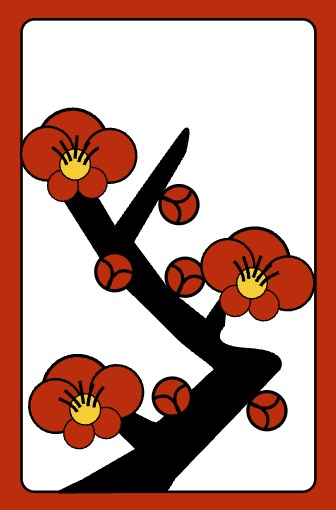
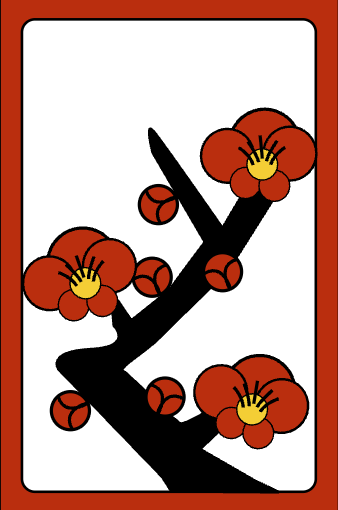
Early spring. A bush warbler perches on plum, the first songbird.
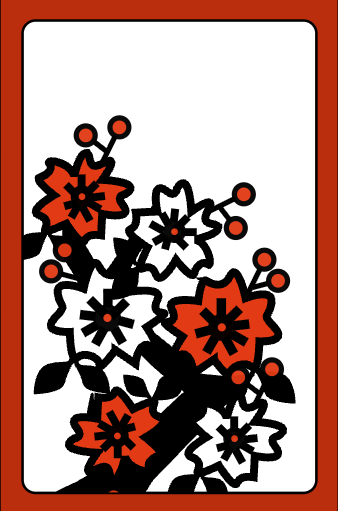
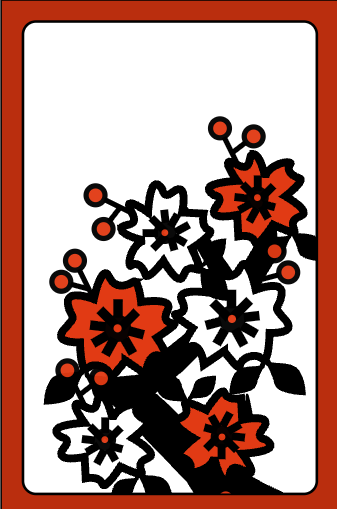
Cherry blossoms in full bloom. The bright depicts a hanami curtain.
Wisteria — colloquially called 흑싸리. A cuckoo crosses the moon.
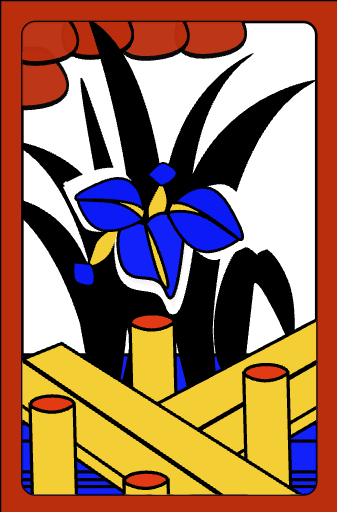
Iris — colloquially 난초. The art shows the famous yatsuhashi bridge.
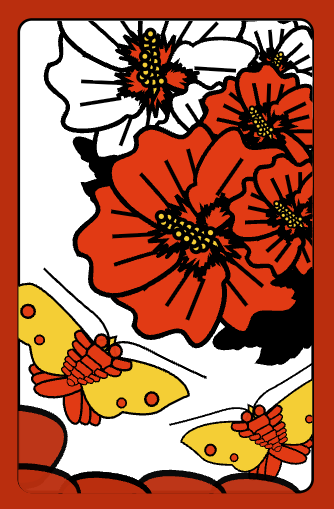
Peony — the 'flower of wealth' — paired with butterflies.
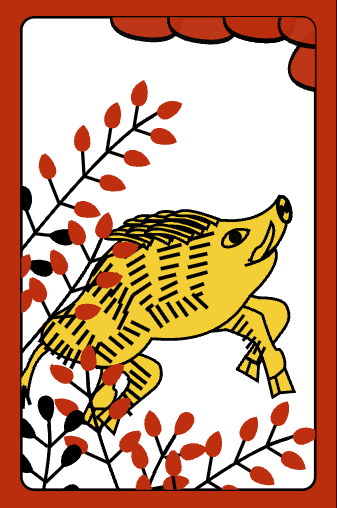
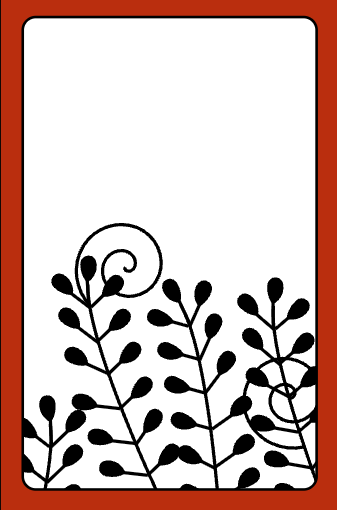
Red bush clover. The boar — part of the boar-deer-butterfly trio.
Empty mountain, full moon — the most poetic moon in East Asian art.
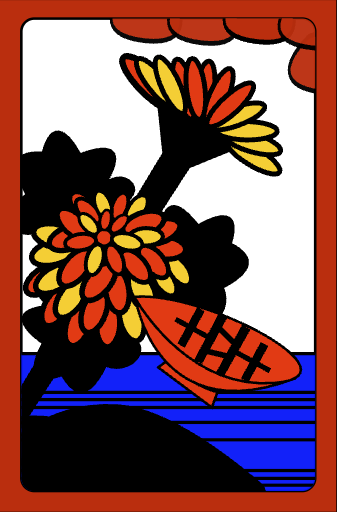
Chrysanthemum. The sake cup is for the longevity festival on 9/9.
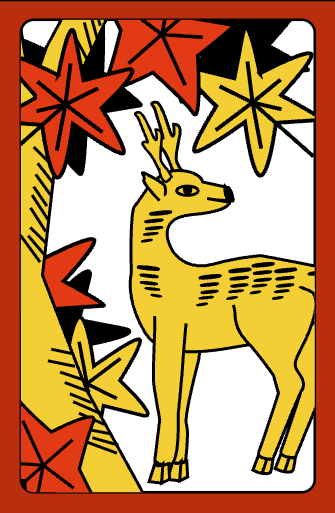
Peak maple. The stag stands as the iconic autumn animal.
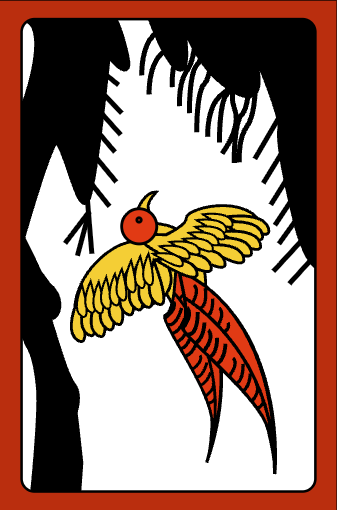
Paulownia ('poo-bright'). The phoenix only lands on this tree.
Rain. Calligrapher Ono no Michikaze under an umbrella — perseverance.
How a round begins
Where cards go and how they get there — follow along in four steps. Click 'Next' to advance the deal.
1. Shuffle the deck
Shuffle all 48 face-down cards. Who gets what is up to chance — that's the whole point.
How a round works
Follow one turn from start to finish. Start with the normal flow, then explore the variations — jjok, ttadak, and ppeok.
A vanilla turn with a single match.
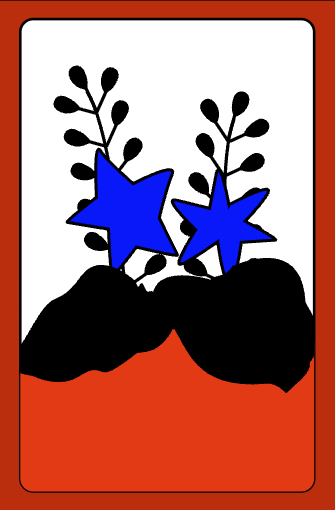
Deal the cards
In a 3-player game, each player gets 7 cards in hand. 8 cards lie face-up on the floor (바닥, badak). The remaining 19 form the deck.
Scoring
Brights, ribbons, animals, pips — each type scores differently. Special combos (three-of-a-color, three songbirds) earn bonus points.
Brights
There are five brights. Three or more begin to score — but the December Rain bright (비광 · Bigwang) discounts the score by one when it's part of the count.
Ribbons
Five ribbons score 1 point, +1 per extra. Three of the same color form a separate combo bonus.
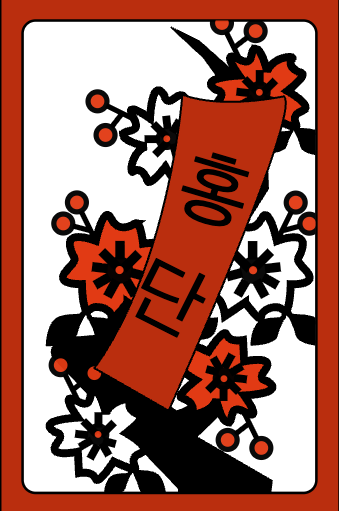
Red ribbons of January, February, March — poetry-inscribed.
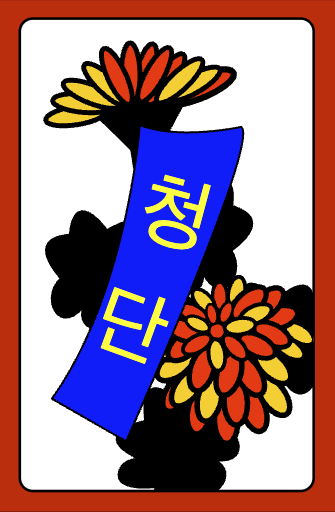
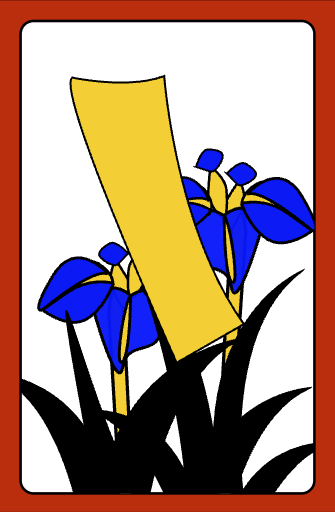
Blue ribbons of June, September, October.
Grass-colored ribbons of April, May, July.
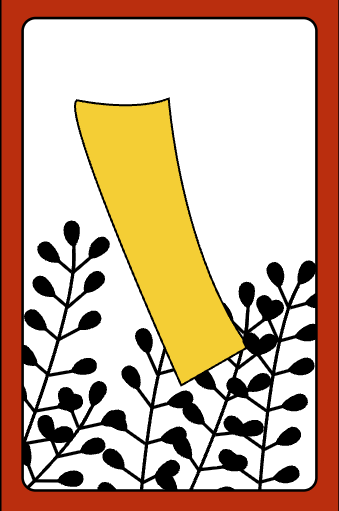
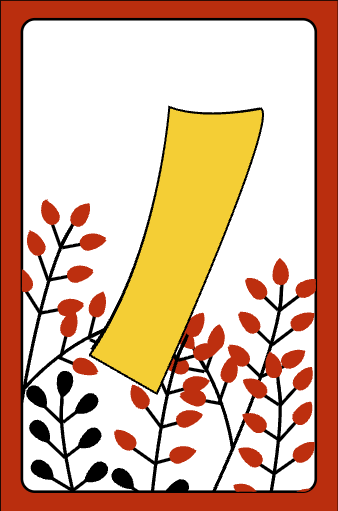
* The December ribbon doesn't count toward any combo, but does add to total ribbon count.
Animals
Five animals score 1 point, +1 per extra. Collecting all three songbirds forms godori — a separate combo.
Three bird animals — warbler (February), cuckoo (April), geese (August).
Pips
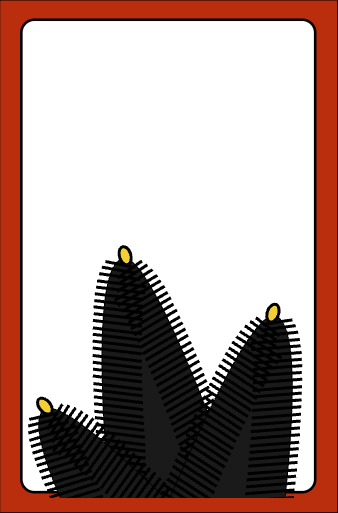
Ten pips score 1 point, +1 per extra. Double pips (쌍피) count as two each.
* Bonus pi (matgo only) similarly counts as 2.
Patterns that score
At a glance, the exact cards each combo requires. Click any tab to see another shape.
Five Brights
All five bright (광) cards. The highest single combo in standard go-stop — collect the entire bright set and you score 15 in one go.
Score calculator
Click any card to add it to your collection. Total score and active combos update live in the panel on the right.
Special rules
Why go-stop isn't just card matching: bonus moves that earn pi from opponents, stuck-card traps, and multipliers that double the round.
Bonus moves — gain pi from each opponent
Jjok — match on flip
쪽+1 piYou played a hand card that didn't match anything on the floor — but the card you flipped from the deck happens to be the same month. Take the pair, plus one pi from each opponent.
Ttadak — same-month triple match
따닥+1 piWhen two same-month cards are already on the floor and your hand card matches them, you take all three. Plus one pi from each opponent.
Pokdan — 3-card bomb
폭탄 (3장)+1 piIf you hold three cards of the same month and the fourth is on the floor, drop all three at once and take all four. Plus one pi from each opponent.
Stuck — cards get tied up
Ppeok — flip locks the floor
뻑You play a hand card that matches a floor card. But the card you flip is also the same month — all three cards stay locked on the floor. The next player to play that month takes everything.
* 자뻑 (self-ppeok): your own play + flip both being the same month also creates this lock.
Multipliers — score doubles
Heunduki — declared shake
흔들기×2If your starting hand contains three cards of the same month, you can declare 'shake' — the round's score doubles.
* Four-of-a-month is sometimes called bomb-shake — multipliers may stack depending on local rules.
Bak system — penalties for the loser
Pi-bak
If you stop while an opponent has fewer than 7 pi, their payment doubles.
Gwang-bak
If you score with brights but an opponent has zero brights, their payment doubles.
Meong-bak
If you score with animals but an opponent has fewer than 5 animals, their payment doubles.
Go or Stop?
The decision baked into the game's name. The moment you hit 7 points, you choose: end the round or risk doubling — for both reward and punishment.
Lock in your current score. Round ends, you win — at base value.
Continue scoring. But if an opponent stops first, you pay double instead of receiving.
Go progression — multipliers
* Each go requires you to score at least one more point before calling again. Fall short and the round can be voided.
Try the call
Safe stop
You've just hit 7 points. Both opponents are far from a comeback, and the deck is almost empty.
Tempting go
You hit 7 with two brights (광) already, and you can see the third bright is on the floor — easily reachable. Plenty of deck left.
Trap of going
You hit 7 but an opponent is at 6 and clearly hunting brights — they have 2 already. Going here is dangerous.